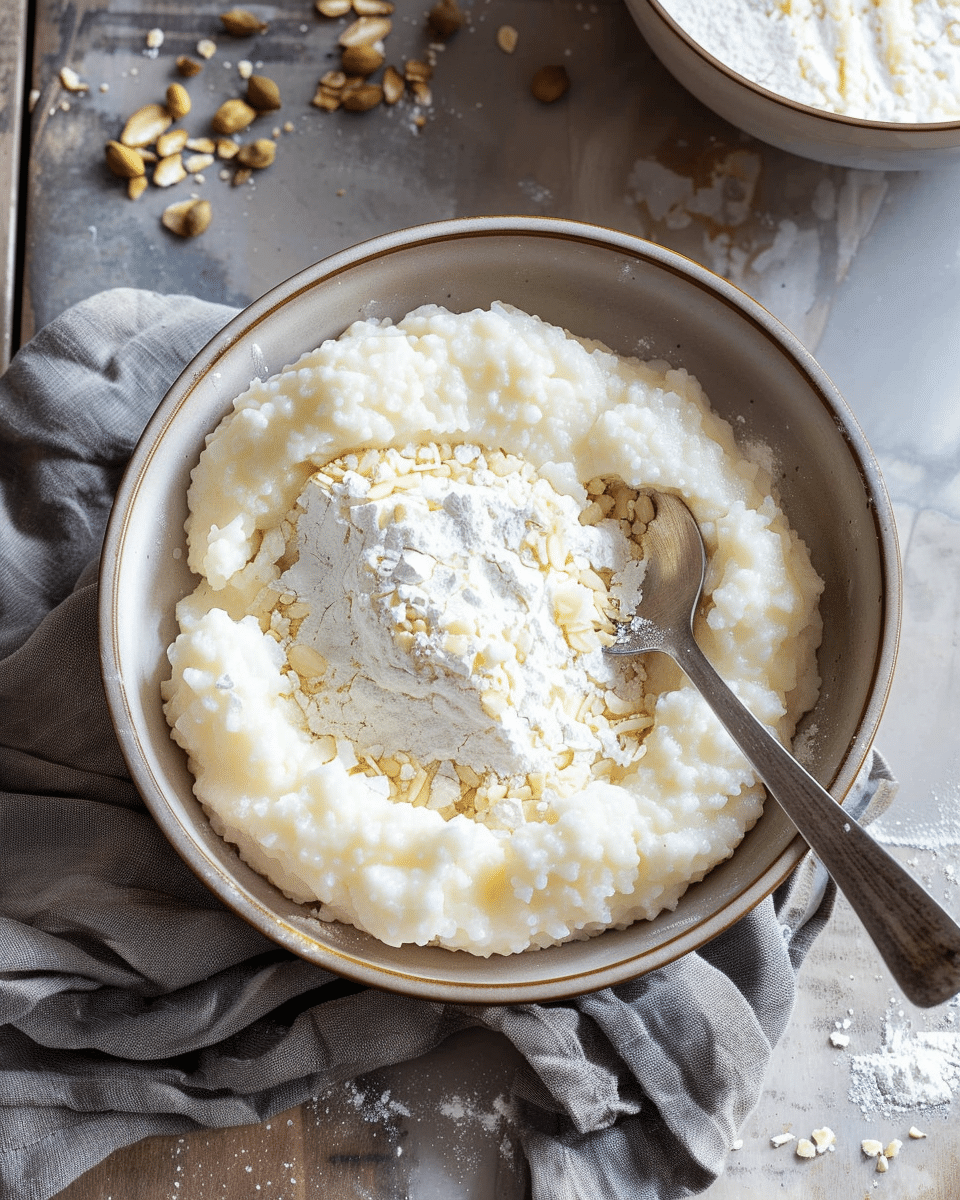
(Tip: You’ll find the full list of ingredients and measurements in the recipe card below.)
whole milk heavy cream (optional for extra richness) semolina or cornstarch sugar orange blossom water or rose water optional: white bread slices (crust removed), for traditional texture and thickness
Directions
In a saucepan over medium heat, combine milk, sugar, and semolina (or cornstarch). Stir continuously to avoid lumps.
Once the mixture begins to thicken, add heavy cream if using, and continue to stir until smooth and pudding-like.
If using, tear white bread slices into small pieces and stir them into the mixture to absorb and thicken.
Add orange blossom water or rose water to taste and stir to combine.
Remove from heat and transfer to a bowl. Cover the surface with plastic wrap to prevent a skin from forming.
Let cool to room temperature, then refrigerate until fully chilled and thickened.
Servings and timing
This recipe yields about 1½ to 2 cups of Ashta. Prep time: 5 minutes Cook time: 10 minutes Chilling time: 1 hour (optional, for best texture) Total time: Approximately 1 hour 15 minutes
Variations
Bread-based Ashta: Add crustless white bread slices to achieve a thicker, more traditional texture.
Cornstarch version: Use cornstarch instead of semolina for a smoother, custard-like finish.
Lighter version: Omit heavy cream and use all milk for a lighter consistency.
Vegan version: Use plant-based milk and omit cream, thickening with cornstarch or semolina.
Sweeten to taste: Adjust sugar based on how you plan to use the Ashta.
Double floral flavor: Use both orange blossom and rose water for a deeper aromatic profile.
Infused milk: Simmer milk with a cinnamon stick or lemon peel for a subtle infusion.
Add mascarpone: Fold in mascarpone cheese for a richer, thicker filling.
Top with nuts: Serve as a dessert topped with crushed pistachios or almonds and a drizzle of honey.
Freeze into popsicles: Freeze sweetened Ashta in molds for a frozen Middle Eastern treat.
Storage/Reheating
Store Ashta in an airtight container in the refrigerator for up to 3–4 days.
Ashta is not ideal for freezing, as it may separate when thawed.
No reheating is needed. Ashta is best served chilled or at room temperature.
FAQs
What is Ashta made of?
Ashta is made from milk, sugar, and a thickener like semolina or cornstarch, and it’s often flavored with floral waters like rose or orange blossom.
Is Ashta the same as clotted cream?
Not exactly. While similar in richness and texture, Ashta is cooked and thickened with semolina or cornstarch, unlike traditional clotted cream made by heating and skimming heavy cream.
What is Ashta used for?
Ashta is a filling for many Arabic desserts such as Atayef, Knefeh, Warbat, and Osmaliyeh. It can also be served on its own as a dessert.
Can I make Ashta without semolina?
Yes, you can use cornstarch as a substitute to achieve a smoother, custard-like texture.
Can I make it vegan?
Yes, use plant-based milk (like almond or oat milk) and a vegan thickener such as cornstarch. Omit any dairy cream or butter.
How thick should Ashta be?
It should be thick enough to hold its shape when scooped, similar to pastry cream or pudding.
Can I flavor Ashta with something else?
Yes, you can add vanilla extract, cinnamon, or lemon zest depending on your dessert use.
How long does it keep?
Ashta stays fresh for up to 3–4 days in the refrigerator when stored in an airtight container.
Can I freeze Ashta?
Freezing is not recommended, as the texture may become grainy or separate upon thawing.
Can I use it in non-traditional desserts?
Absolutely. Try using it as a filling for cakes, pastries, or layered with fruit in parfaits for a modern twist.
Conclusion
Ashta is a luxurious, silky cream that adds richness and a floral note to countless Middle Eastern desserts. Simple to prepare and incredibly versatile, it elevates everything from stuffed pastries to layered sweets. Whether you’re making Atayef during Ramadan or just want a new creamy treat to try, Ashta is a must-have recipe in your dessert repertoire.
Ashta is a rich and creamy Middle Eastern clotted cream, often used as a filling for desserts like atayef, knafeh, and pastries. Made with milk, thickened with cornstarch or semolina, and flavored with rose or orange blossom water, Ashta is luxurious and lightly sweetened—perfect for layering or enjoying by the spoonful.
Ingredients
2 cups whole milk
2 tbsp cornstarch (or 2 tbsp fine semolina)
2 tbsp sugar (optional, adjust to taste)
1 tbsp rose water or orange blossom water (or a mix of both)
Optional: 1/4 cup heavy cream (for extra richness)
Instructions
In a small bowl, dissolve cornstarch (or semolina) in 1/4 cup of the milk and set aside.
In a saucepan over medium heat, heat the remaining milk and sugar until just warm.
Slowly whisk in the cornstarch mixture, stirring constantly to avoid lumps.
Continue cooking and stirring until the mixture thickens to a pudding-like consistency (about 5–7 minutes).
Once thickened, remove from heat and stir in rose water and/or orange blossom water.
Optional: Fold in heavy cream for a richer texture.
Transfer the Ashta to a bowl, cover the surface with plastic wrap, and let it cool to room temperature, then refrigerate until fully chilled and set.
Notes
Use fine semolina instead of cornstarch for a more traditional texture.Adjust the sweetness to your preference—Ashta is often mildly sweet.For extra flavor, combine both rose and orange blossom water.Great as a filling for atayef, knafeh, osmaliyeh, or eaten with honey and fruit.Refrigerate in an airtight container for up to 3 days.