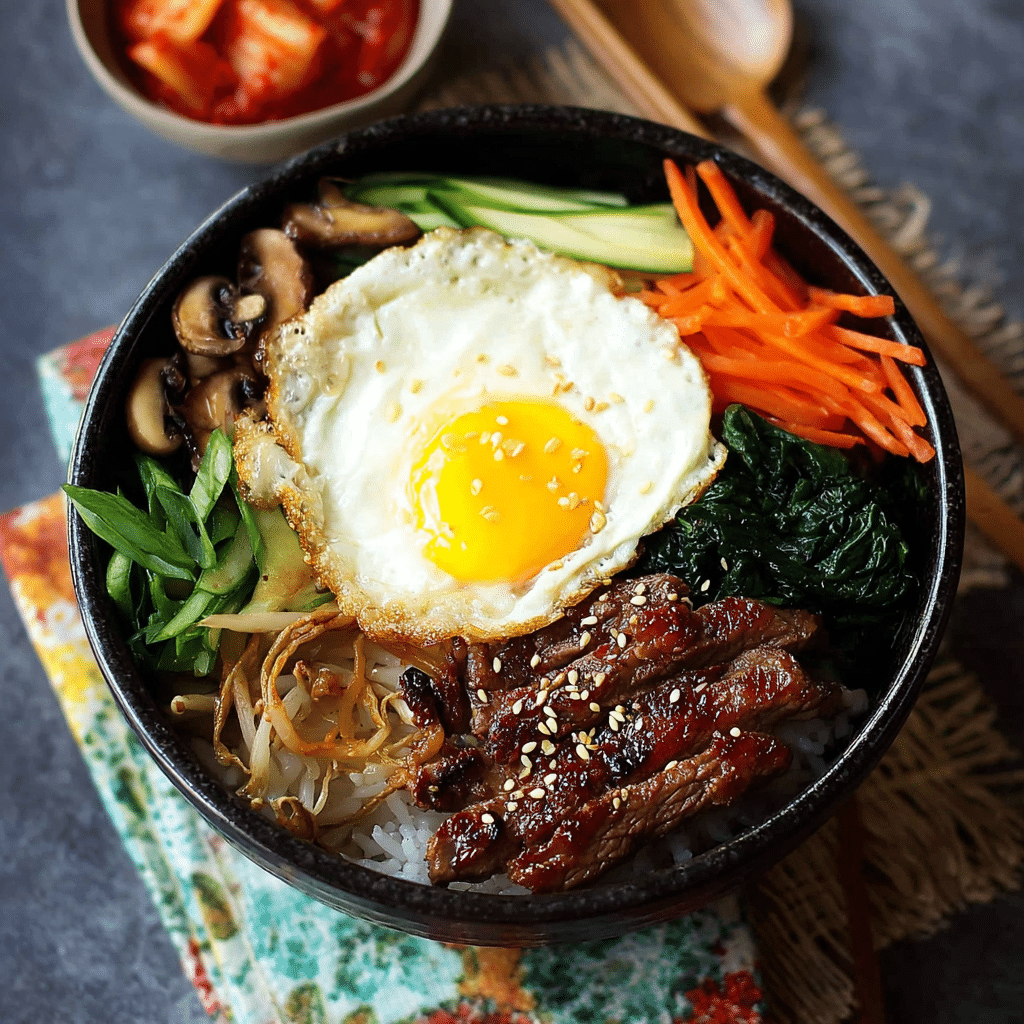
Bibimbap is incredibly customizable, healthy, and full of bold, delicious flavor. It’s the perfect way to use up leftover rice and vegetables while still creating a dish that feels special. Whether you like it vegetarian, meaty, spicy, or mild, bibimbap can be adjusted to your tastes. It’s also beautiful to serve, thanks to its vibrant toppings and golden yolk center.
Ingredients
(Tip: You’ll find the full list of ingredients and measurements in the recipe card below.)
Cooked short-grain rice (preferably warm)
Carrots (julienned)
Spinach or other leafy greens
Zucchini (sliced or julienned)
Mushrooms (shiitake or button, sliced)
Bean sprouts
Egg (fried or raw yolk for traditional presentation)
Sesame oil
Soy sauce
Garlic (minced)
Gochujang (Korean chili paste)
Sugar
Vinegar (optional, for sauce)
Sesame seeds (for garnish)
Protein of choice (bulgogi beef, tofu, chicken, or none)
Directions
Prepare and cook all vegetables separately: sauté spinach, carrots, zucchini, and mushrooms individually with a little oil, garlic, and a splash of soy sauce or salt. Set aside.
Blanch bean sprouts in boiling water for 1–2 minutes, then season with a bit of sesame oil and salt.
If using meat or tofu, cook it in a skillet with garlic, soy sauce, and a touch of sugar until fully done.
Fry an egg sunny side up or to your preference.
In a small bowl, mix gochujang with sesame oil, a bit of sugar, and vinegar to create the sauce. Adjust spice level to taste.
To assemble, place warm rice in a large bowl. Arrange vegetables, protein, and egg over the top in sections.
Drizzle with gochujang sauce and sprinkle with sesame seeds.
Mix everything together before eating to combine the flavors and textures.
Servings and timing
This recipe serves 2 to 3 people. Prep Time: 15 minutes Cook Time: 15 minutes Total Time: 30 minutes
Variations
Vegetarian Bibimbap: Use tofu and skip the egg or use a plant-based alternative.
Bulgogi Bibimbap: Add thinly sliced marinated beef for a savory, sweet protein boost.
Spicy Lovers: Add extra gochujang or sliced Korean chilies.
No-Rice Option: Use cauliflower rice or quinoa for a low-carb variation.
Bibimbap in a Stone Bowl (Dolsot): Use a hot stone bowl to get a crispy rice bottom.
Storage/Reheating
Store leftover components separately in airtight containers in the fridge for up to 3 days. Reheat the rice and toppings individually, then assemble and top with a fresh egg before serving. Avoid storing the fried egg, as it’s best made fresh.
FAQs
What does “bibimbap” mean?
Bibimbap means “mixed rice” in Korean, referring to the way it’s eaten—by mixing everything together before eating.
Is bibimbap spicy?
It can be. The gochujang sauce adds spice, but you can control the heat level based on how much you use.
Can I make bibimbap without gochujang?
Yes, though gochujang is traditional. You can use a soy sauce-based dressing or a mild chili garlic sauce as an alternative.
What kind of rice is best?
Short-grain white rice or sushi rice is best for its sticky texture, but brown rice can also be used.
Can I make it ahead?
You can prep all components in advance and assemble just before serving.
Is bibimbap healthy?
Yes, it’s full of vegetables, lean protein, and healthy fats from sesame oil. It’s a well-balanced meal.
What’s the purpose of serving ingredients separately?
It keeps textures and flavors distinct until mixed. It also gives the dish its signature colorful look.
Can I use leftover vegetables?
Absolutely. Bibimbap is perfect for using up leftover stir-fried or steamed vegetables.
Is bibimbap served hot or cold?
Traditionally, it’s served warm, but some versions (like summer bibimbap) can be served cold.
Can I make it vegan?
Yes—use tofu, skip the egg, and ensure your gochujang is vegan (some contain anchovy or fish products).
Conclusion
Bibimbap is a vibrant, nourishing, and endlessly customizable dish that brings together the best of Korean home cooking. With just a bit of prep, you can create a colorful rice bowl bursting with flavor, texture, and nutrition. Whether you enjoy it spicy, meaty, or fully plant-based, this classic dish is a satisfying meal you’ll return to again and again.
Bibimbap is a colorful and nutritious Korean rice bowl topped with an assortment of sautéed vegetables, protein, a fried egg, and a bold gochujang-based sauce. It’s a customizable, balanced, and deeply satisfying meal.
Ingredients
2 cups cooked short-grain rice (preferably warm)
1/2 cup carrots, julienned
1 cup spinach or leafy greens
1/2 cup zucchini, julienned or sliced
1/2 cup mushrooms (shiitake or button), sliced
1/2 cup bean sprouts
2 eggs (fried or raw yolk for traditional presentation)
1 tbsp sesame oil (plus more for cooking)
2 tbsp soy sauce
2 cloves garlic, minced
2 tbsp gochujang (Korean chili paste)
1 tsp sugar
1 tsp rice vinegar (optional)
1 tsp sesame seeds (for garnish)
1 cup protein of choice (bulgogi beef, tofu, or chicken)
Instructions
Individually sauté the spinach, carrots, zucchini, and mushrooms in a lightly oiled pan with garlic and a splash of soy sauce or salt. Set each aside.
Blanch bean sprouts in boiling water for 1–2 minutes. Drain and toss with a bit of sesame oil and salt.
Cook the protein of choice with soy sauce, garlic, and a pinch of sugar until fully cooked. Set aside.
Fry the eggs sunny side up or to your preference.
In a small bowl, mix gochujang, sesame oil, sugar, and vinegar to make the sauce. Adjust for desired heat and sweetness.
To assemble, add warm rice to serving bowls. Arrange vegetables, protein, and egg on top in separate sections.
Drizzle with gochujang sauce and garnish with sesame seeds.
Mix thoroughly before eating to combine all flavors and textures.
Notes
Use short-grain rice for the best texture, but brown rice or quinoa work as alternatives.Tofu can be pan-fried or baked for extra texture in vegetarian versions.Customize toppings based on what’s in your fridge—leftovers work great!Make the gochujang sauce ahead and store it in the fridge for easy future use.For extra texture, try serving in a hot stone bowl (dolsot) to crisp the rice.