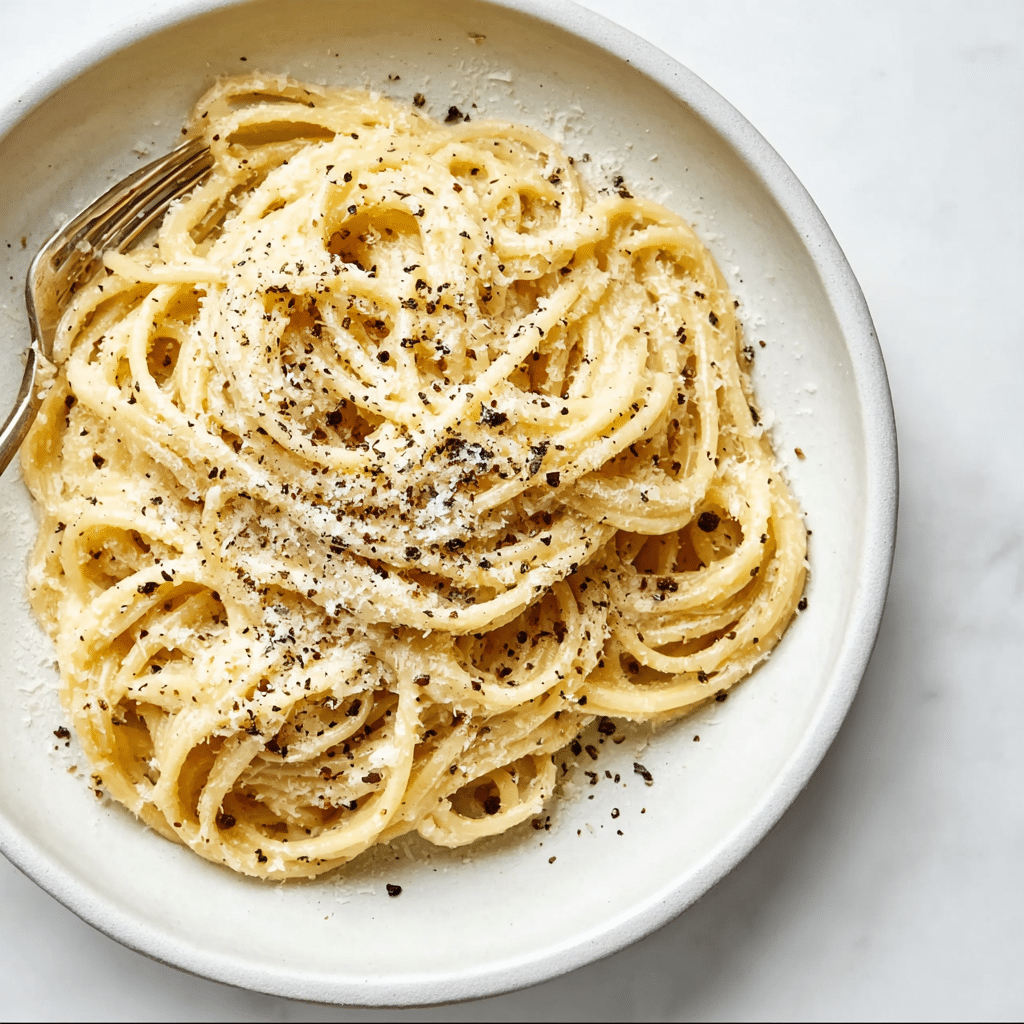
Perfect for weeknight dinners or special occasions.
Budget-friendly and satisfying.
Ingredients
(Tip: You’ll find the full list of ingredients and measurements in the recipe card below.)
12 ounces spaghetti or tonnarelli
1 ½ cups finely grated Pecorino Romano cheese
1 ½ teaspoons freshly cracked black pepper (or to taste)
Salt for pasta water
Directions
Bring a large pot of water to a boil. Add salt generously; the water should taste like the sea.
Add the pasta and cook until al dente according to package instructions. Reserve about 1 ½ cups of pasta cooking water before draining.
While the pasta cooks, toast the freshly cracked black pepper in a large skillet over medium heat for about 1 minute, until fragrant.
Add about ½ cup of the reserved pasta water to the skillet with the pepper and let it simmer briefly.
Transfer the drained pasta directly into the skillet. Toss to coat.
Remove the skillet from heat. Gradually add the grated Pecorino Romano cheese, tossing continuously and adding small splashes of reserved pasta water as needed to create a smooth, creamy sauce.
Continue tossing until the cheese melts into a glossy sauce that coats the pasta evenly. Serve immediately with extra Pecorino and black pepper if desired.
Servings and timing
Servings: 4 servings
Prep time: 5 minutes Cook time: 15–20 minutes Total time: About 25 minutes
Variations
Use bucatini instead of spaghetti for a thicker bite.
Mix Pecorino Romano with a small amount of Parmigiano-Reggiano for a milder flavor.
Add a touch of butter for extra richness, though it’s not traditional.
Incorporate sautéed mushrooms or grilled chicken for a heartier version.
Try whole wheat pasta for added texture and fiber.
Storage/Reheating
Cacio e Pepe is best enjoyed fresh, as the sauce can thicken and clump when cooled.
Storage: Store leftovers in an airtight container in the refrigerator for up to 2 days.
Reheating: Reheat gently in a skillet over low heat with a splash of water to loosen the sauce. Stir continuously to help restore creaminess. Avoid microwaving at high heat, as it may cause the cheese to separate.
FAQs
Why does my sauce turn clumpy instead of creamy?
This usually happens if the pan is too hot when adding the cheese. Remove it from heat before mixing in the cheese and add reserved pasta water gradually.
Can I use Parmesan instead of Pecorino Romano?
Yes, but the flavor will be milder and less sharp. Traditional Cacio e Pepe uses Pecorino Romano for its distinctive taste.
What pasta works best for Cacio e Pepe?
Spaghetti and tonnarelli are the most traditional choices because they hold the sauce well.
How salty should the pasta water be?
The water should be well-salted, similar to seawater, to properly season the pasta.
Can I make this dish ahead of time?
It’s best served immediately. Preparing it ahead can affect the sauce’s smooth texture.
Why do I need to reserve pasta water?
The starchy pasta water helps emulsify the cheese and create a silky sauce.
How can I prevent the cheese from separating?
Allow the pasta to cool slightly before adding the cheese and avoid direct heat while mixing.
Is Cacio e Pepe vegetarian?
Yes, as long as the cheese used is made without animal rennet.
Can I add cream to make it easier?
Traditional recipes do not use cream. The creaminess comes from cheese and pasta water emulsification.
How do I get the strongest pepper flavor?
Use freshly cracked black pepper and toast it briefly in the skillet before adding pasta water.
Conclusion
Cacio e Pepe is a beautiful example of how simplicity can create extraordinary flavor. With just pasta, cheese, and pepper, you can prepare a creamy, comforting dish that captures the essence of Roman cuisine. Master the technique, and you’ll have a reliable, impressive recipe that never fails to satisfy.
Cacio e Pepe is a traditional Roman pasta dish made with just three core ingredients: pasta, Pecorino Romano cheese, and freshly cracked black pepper. This authentic Cacio e Pepe recipe creates a rich, creamy sauce without butter or cream, relying instead on the perfect emulsification of cheese and starchy pasta water. Simple, elegant, and ready in under 30 minutes, it’s a timeless Italian classic you can master at home.
Ingredients
12 ounces spaghetti or tonnarelli
1½ cups finely grated Pecorino Romano cheese
1½ teaspoons freshly cracked black pepper (or to taste)
Salt, for pasta water
Instructions
Bring a large pot of water to a boil. Salt generously—the water should taste like the sea.
Add pasta and cook until al dente according to package instructions. Reserve about 1½ cups of pasta cooking water before draining.
While pasta cooks, toast freshly cracked black pepper in a large skillet over medium heat for about 1 minute, until fragrant.
Add ½ cup of reserved pasta water to the skillet and let it simmer briefly.
Transfer drained pasta directly into the skillet. Toss to coat.
Remove skillet from heat. Gradually add grated Pecorino Romano, tossing continuously. Add small splashes of reserved pasta water as needed to create a smooth, creamy sauce.
Continue tossing until the cheese melts into a glossy sauce that evenly coats the pasta.
Serve immediately with extra Pecorino and freshly cracked black pepper if desired.
Notes
Bucatini can be used for a thicker bite.Mix in a small amount of Parmigiano-Reggiano for a milder flavor.Avoid adding cheese over direct heat to prevent clumping.The key to creaminess is gradual cheese addition and proper temperature control.Freshly cracked black pepper provides the best flavor.