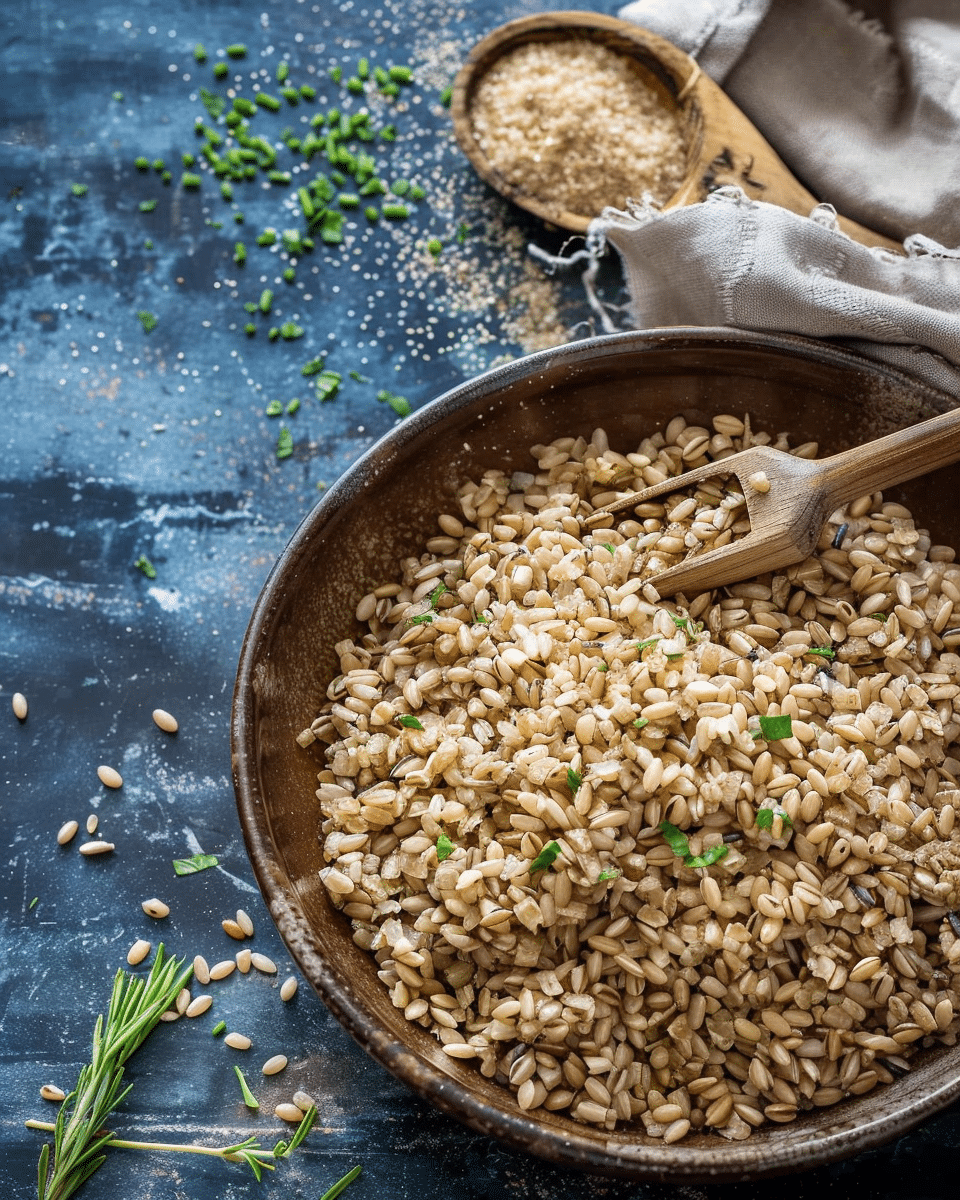
Barley is nutritious, filling, and budget-friendly. Once cooked, it adds heartiness to any dish and absorbs flavors beautifully. Whether you’re using it as a rice substitute, in soups, or as a base for grain bowls, barley brings texture and nutrition to your meals. Plus, it’s easy to make ahead and store, making it perfect for meal prep.
Ingredients
(Tip: You’ll find the full list of ingredients and measurements in the recipe card below.)
Barley (pearl or hulled)
Water or broth
Salt (optional)
Directions
For Stovetop Cooking:
Rinse the barley under cold water using a fine mesh sieve.
In a pot, combine 1 cup of barley with 3 cups of water or broth. Add a pinch of salt if desired.
Bring to a boil over high heat.
Reduce the heat to low, cover, and simmer:
Pearl barley: Cook for 25–30 minutes
Hulled barley: Cook for 40–50 minutes
Check for doneness. Barley should be tender yet chewy.
Drain any excess liquid if necessary.
Fluff with a fork and serve or use in your favorite recipes.
For Instant Pot:
Rinse the barley.
Add 1 cup barley and 2½ cups water or broth to the Instant Pot.
Cook on high pressure:
Pearl barley: 20 minutes
Hulled barley: 25–30 minutes
Allow natural pressure release for 10 minutes, then quick release any remaining pressure.
Fluff and serve.
Servings and timing
Makes about 3 cups of cooked barley from 1 cup uncooked. Prep time: 5 minutes Cook time: 25–50 minutes depending on the type Total time: 30–55 minutes
Variations
Garlic and herb barley: Cook in vegetable or chicken broth and add minced garlic and herbs for flavor.
Lemon barley: Stir in lemon zest and juice after cooking for a bright finish.
Barley pilaf: Sauté onion and vegetables in oil before adding barley and cooking in broth.
Spiced barley: Add cumin, turmeric, or curry powder to give the grain an aromatic twist.
Cold barley salad: Let barley cool and mix with veggies, herbs, and vinaigrette.
Storage/Reheating
Cooked barley stores well in the fridge for up to 5 days in an airtight container. To reheat, microwave with a splash of water for 1–2 minutes, or warm in a skillet over medium heat. Barley also freezes well—portion it into freezer-safe bags or containers and freeze for up to 3 months. Thaw in the refrigerator or microwave.
FAQs
What’s the difference between pearl and hulled barley?
Hulled barley is more nutritious and takes longer to cook, while pearl barley has had the outer bran removed for quicker cooking.
Do I need to soak barley before cooking?
Soaking isn’t required but can reduce cooking time by about 10–15 minutes, especially for hulled barley.
Can I cook barley in advance?
Yes, barley holds up well after cooking and is perfect for meal prepping or storing for later use.
How much does barley expand when cooked?
Barley roughly triples in volume. One cup uncooked yields about three cups cooked.
Can I use barley in place of rice?
Yes, barley can be a great substitute for rice in bowls, stir-fries, and even risottos.
Is barley gluten-free?
No, barley contains gluten and is not suitable for gluten-free diets.
How do I make barley less chewy?
Cooking a few extra minutes or soaking ahead of time can help make the texture softer.
Can I cook barley in broth instead of water?
Absolutely. Cooking in broth adds more flavor and richness to the grain.
Why is my barley mushy?
Overcooking or using too much water can result in mushy barley. Stick to the recommended ratios and cook time.
Can I use barley in desserts?
Yes, you can use cooked barley in puddings or as a hearty, textured base in sweet grain bowls.
Conclusion
Cooking barley is simple and rewarding, whether you’re preparing a cozy soup, a fresh salad, or a hearty side dish. With its nutty flavor, chewy bite, and excellent nutritional value, barley is a grain worth adding to your regular rotation. Once you master the basics, it opens up a world of delicious and wholesome possibilities
Barley is a chewy, nutty-flavored whole grain that’s easy to cook and highly versatile. Whether used in soups, salads, or grain bowls, it’s a nutritious and hearty addition to any meal.
Ingredients
1 cup barley (pearl or hulled)
3 cups water or broth (for stovetop)
2½ cups water or broth (for Instant Pot)
Pinch of salt (optional)
Instructions
Rinse the barley under cold water using a fine mesh sieve.
For Stovetop: In a pot, combine 1 cup barley with 3 cups water or broth. Add a pinch of salt if desired.
Bring to a boil, then reduce heat to low, cover, and simmer:
– Pearl barley: 25–30 minutes
– Hulled barley: 40–50 minutes
Check for doneness. Barley should be tender yet chewy. Drain any excess liquid.
Fluff with a fork and serve or use in recipes.
For Instant Pot: Combine rinsed barley with 2½ cups water or broth. Cook on high pressure:
– Pearl barley: 20 minutes
– Hulled barley: 25–30 minutes
Allow natural pressure release for 10 minutes, then quick release any remaining pressure.
Fluff with a fork and serve.
Notes
Cooking in broth instead of water adds more flavor.Soaking barley ahead of time reduces cooking time by 10–15 minutes.Barley triples in volume after cooking—1 cup uncooked yields ~3 cups cooked.Store cooked barley in the fridge for up to 5 days or freeze for up to 3 months.Use cooked barley in soups, stews, salads, or as a rice substitute.