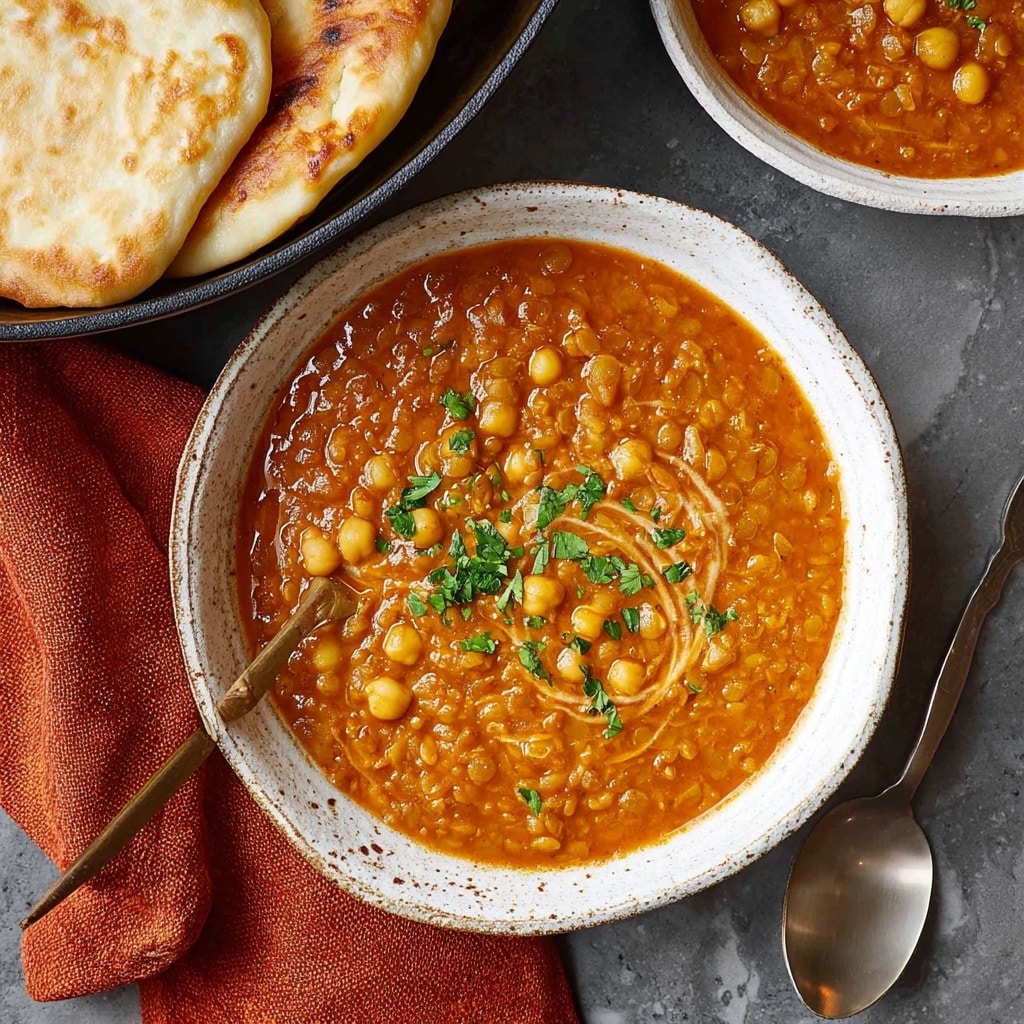
Harira is more than just a soup—it’s a complete, filling meal in a bowl. It’s deeply flavorful thanks to a mix of herbs and spices, while the combination of legumes, vegetables, and (optionally) meat makes it satisfying and wholesome. This soup is perfect for colder days, meal prep, or whenever you’re craving something warm and spiced without being too heavy.
Ingredients
(Tip: You’ll find the full list of ingredients and measurements in the recipe card below.)
Olive oil
Onion (finely chopped)
Celery (finely chopped)
Fresh cilantro and parsley (chopped)
Garlic (minced)
Ground cinnamon
Ground ginger
Ground turmeric
Ground black pepper
Salt
Tomatoes (fresh or canned, blended or finely chopped)
Tomato paste
Cooked or canned chickpeas
Red or green lentils
Small pieces of beef or lamb (optional)
Water or broth
Vermicelli noodles or rice (optional)
Flour (mixed with water to make a slurry, for thickening)
Lemon wedges (for serving)
Directions
In a large pot, heat olive oil over medium heat. Sauté the onion, celery, garlic, cilantro, and parsley until soft and fragrant.
Add the ground spices—cinnamon, ginger, turmeric, pepper, and salt. Stir for 1–2 minutes to toast the spices.
Stir in the blended tomatoes and tomato paste, cooking for about 5 minutes.
Add the lentils, chickpeas, and meat if using. Pour in water or broth to cover all ingredients. Bring to a boil.
Reduce the heat and simmer for 45–60 minutes, until lentils are tender and meat is cooked through.
If using noodles or rice, add them during the last 10–15 minutes of cooking.
Mix flour with water to make a slurry, then slowly stir it into the soup to thicken. Let it simmer for 5 more minutes, stirring regularly.
Adjust salt and seasoning to taste. Serve hot with lemon wedges on the side.
Servings and timing
This recipe serves 6–8 people. Preparation time: 15–20 minutes Cooking time: 1 hour Total time: 1 hour 15–20 minutes
Variations
Vegetarian version: Skip the meat and use vegetable broth for a fully plant-based soup.
Spicy twist: Add harissa or chili flakes for extra heat.
No gluten: Omit flour or use cornstarch or gluten-free flour for thickening.
Different grains: Use barley or quinoa instead of noodles or rice.
Instant Pot method: Cook on high pressure for 20 minutes, then use sauté mode to thicken with the flour slurry.
Storage/Reheating
Store Harira in an airtight container in the refrigerator for up to 4 days. To reheat, warm on the stove over medium heat, adding a bit of water or broth if it thickens too much. It can also be microwaved in individual servings. Harira freezes well—cool completely, then store in freezer-safe containers for up to 2 months. Thaw overnight in the fridge before reheating.
FAQs
What makes Harira different from other soups?
Its unique blend of spices, herbs, and the use of both lentils and chickpeas gives it a distinct Moroccan flavor and hearty texture.
Can I make Harira without meat?
Yes, the vegetarian version is delicious and traditional too, especially during fasting.
Do I need to soak the lentils or chickpeas?
If using dried chickpeas, soak them overnight. Lentils don’t need soaking, especially red ones.
How do I thicken the soup?
A flour-water slurry stirred in at the end of cooking thickens the soup to the traditional consistency.
What kind of meat is best?
Small cuts of beef or lamb work best, preferably stewing cuts like shank or shoulder.
Is Harira spicy?
Not usually—it’s more warm and fragrant than spicy, but you can add chili if you like heat.
Can I prepare Harira ahead of time?
Yes, it tastes even better the next day as the flavors develop.
What is typically served with Harira?
Dates, hard-boiled eggs, lemon wedges, and crusty bread are common side items, especially during Ramadan.
Can I skip the noodles or rice?
Yes, both are optional and based on personal or regional preference.
Why is it called Harira?
“Harira” comes from the Arabic word for “silky,” referring to the soup’s smooth, thick texture.
Conclusion
Harira Soup is a comforting and flavorful dish that brings together wholesome ingredients and aromatic spices in every spoonful. Whether you’re making it for a special occasion or as a nourishing weeknight meal, its warmth and depth of flavor make it a recipe you’ll come back to time and time again.
Harira Soup is a traditional Moroccan soup made with lentils, chickpeas, tomatoes, and warm spices. Often served during Ramadan, it’s a nourishing, hearty, and aromatic dish that can be made with or without meat for a comforting and satisfying meal.
Ingredients
2 tbsp olive oil
1 large onion, finely chopped
2 celery stalks, finely chopped
1/2 cup fresh cilantro, chopped
1/2 cup fresh parsley, chopped
3 cloves garlic, minced
1/2 tsp ground cinnamon
1 tsp ground ginger
1/2 tsp ground turmeric
1/2 tsp ground black pepper
Salt to taste
4 cups blended or finely chopped tomatoes (fresh or canned)
2 tbsp tomato paste
1 cup cooked or canned chickpeas, drained
3/4 cup red or green lentils
1 cup small beef or lamb pieces (optional)
6–8 cups water or broth
1/2 cup vermicelli noodles or 1/3 cup rice (optional)
1/4 cup flour mixed with 1/2 cup water (slurry, for thickening)
Lemon wedges, for serving
Instructions
In a large pot, heat olive oil over medium heat. Sauté onion, celery, garlic, cilantro, and parsley until soft and fragrant.
Add cinnamon, ginger, turmeric, black pepper, and salt. Stir for 1–2 minutes to toast the spices.
Stir in blended tomatoes and tomato paste. Cook for about 5 minutes.
Add lentils, chickpeas, and meat (if using). Pour in water or broth to cover ingredients. Bring to a boil.
Reduce heat and simmer for 45–60 minutes, until lentils are tender and meat is cooked through.
If using noodles or rice, add during the last 10–15 minutes of cooking.
Mix flour with water to make a slurry. Stir into the soup to thicken and simmer for 5 more minutes.
Adjust salt and seasoning as needed. Serve hot with lemon wedges.
Notes
Skip the meat and use vegetable broth for a vegetarian version.Add harissa or chili flakes for a spicy kick.Use gluten-free flour or cornstarch for a gluten-free option.Barley or quinoa can be used instead of noodles or rice.Harira tastes even better the next day after the flavors develop.