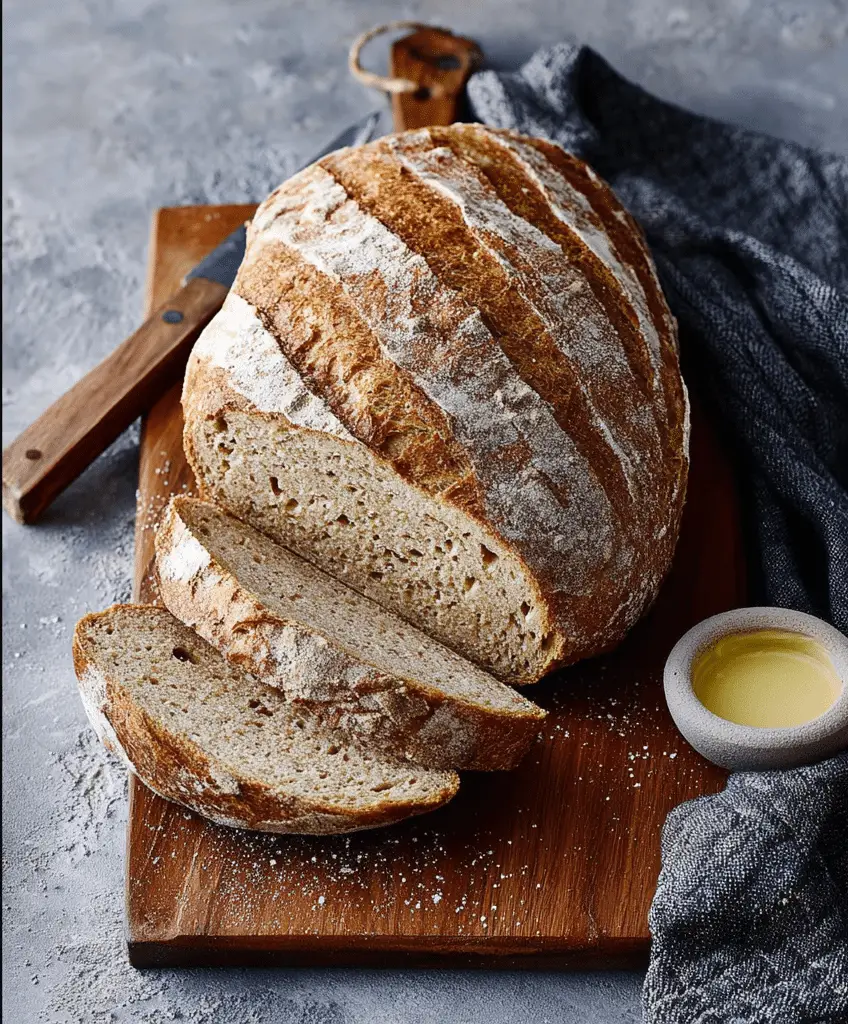
This recipe takes the stress out of bread making by eliminating kneading while still producing a beautifully crusty loaf. Rye flour adds a deep, earthy flavor that pairs well with both savory and sweet toppings. With just a bit of patience for rising, you’ll get a homemade bread that feels artisan with very little effort.
Ingredients
(Tip: You’ll find the full list of ingredients and measurements in the recipe card below.) rye flour all-purpose flour instant yeast salt warm water honey or molasses (optional, for added flavor) caraway seeds (optional)
Directions
In a large bowl, mix together rye flour, all-purpose flour, yeast, and salt.
Add warm water and honey or molasses if using, then stir until a sticky dough forms.
Cover the bowl with plastic wrap or a clean towel and let the dough rest at room temperature for 12–18 hours.
After rising, the dough should be bubbly and expanded. Lightly flour a surface and gently shape the dough into a round loaf.
Place the dough on parchment paper, cover, and let it rest for another 30–60 minutes.
Meanwhile, preheat your oven to 230°C (450°F) and place a covered oven-safe pot (like a Dutch oven) inside to heat.
Carefully transfer the dough into the hot pot, cover with the lid, and bake for 30 minutes.
Remove the lid and bake for an additional 10–15 minutes until the crust is deep brown.
Remove from the oven and let the bread cool completely before slicing.
You can add seeds like sunflower or flax for extra texture and nutrition. For a stronger rye flavor, increase the proportion of rye flour slightly. Adding a bit of cocoa powder can deepen the color and give a subtle richness. You can also mix in chopped nuts or dried fruit for a unique twist.
Storage/Reheating
Store the bread at room temperature in a paper bag or wrapped in a clean towel for up to 2 days. For longer storage, keep it in an airtight container in the refrigerator for up to 5 days or freeze slices for up to 2 months. Reheat slices in a toaster or warm them in the oven for a freshly baked feel.
FAQs
What makes rye bread different from regular bread?
Rye flour gives the bread a denser texture and a slightly tangy, earthy flavor.
Do I really not need to knead the dough?
Yes, the long resting time allows gluten to develop naturally without kneading.
Can I use only rye flour?
It’s possible, but the bread will be much denser and less airy.
Why is my dough so sticky?
Rye dough is naturally stickier than wheat dough, which is normal.
Can I make this without a Dutch oven?
Yes, you can bake it on a tray, but you may not get the same crusty texture.
What does caraway add to the bread?
Caraway seeds provide a classic rye bread flavor with a slightly nutty taste.
How do I know when the bread is done?
It should have a deep brown crust and sound hollow when tapped.
Can I shorten the rising time?
A shorter rise will affect the flavor and texture, so it’s best to allow the full time.
Can I make it sweeter?
Yes, increase the honey or molasses slightly for a sweeter loaf.
Why should I let the bread cool before slicing?
Cooling helps the structure set, preventing the bread from becoming gummy.
Conclusion
No-knead rye bread is a simple yet rewarding recipe that brings the rich, hearty flavor of rye to your table with minimal effort. With its crisp crust and tender interior, it’s perfect for sandwiches, spreads, or enjoying on its own.
No-Knead Rye Bread is a rustic, hearty loaf with a deep, earthy flavor and crusty exterior, made effortlessly without kneading. This easy homemade rye bread is perfect for beginners and delivers bakery-quality results with minimal effort.
Ingredients
1 1/2 cups rye flour
1 1/2 cups all-purpose flour
1 teaspoon instant yeast
1 1/2 teaspoons salt
1 1/2 cups warm water
1 tablespoon honey or molasses (optional)
1–2 teaspoons caraway seeds (optional)
Instructions
In a large bowl, combine rye flour, all-purpose flour, yeast, and salt.
Add warm water and honey or molasses (if using). Stir until a sticky dough forms.
Cover the bowl with plastic wrap or a clean towel and let it rest at room temperature for 12–18 hours.
Once risen, the dough should be bubbly and expanded. Turn it onto a lightly floured surface and gently shape into a round loaf.
Place the dough on parchment paper, cover, and let rest for 30–60 minutes.
Preheat oven to 230°C (450°F) with a covered Dutch oven inside.
Carefully transfer the dough into the hot pot, cover, and bake for 30 minutes.
Remove the lid and bake for an additional 10–15 minutes until the crust is deep brown.
Remove from oven and let cool completely before slicing.
Notes
Rye dough is naturally sticky—avoid adding too much extra flour.For stronger rye flavor, increase rye flour slightly (expect a denser loaf).Add sunflower seeds or flaxseeds for texture and nutrition.A small amount of cocoa powder can deepen color and flavor.No Dutch oven? Bake on a tray with a pan of water in the oven for steam.Always let bread cool fully before slicing to avoid a gummy texture