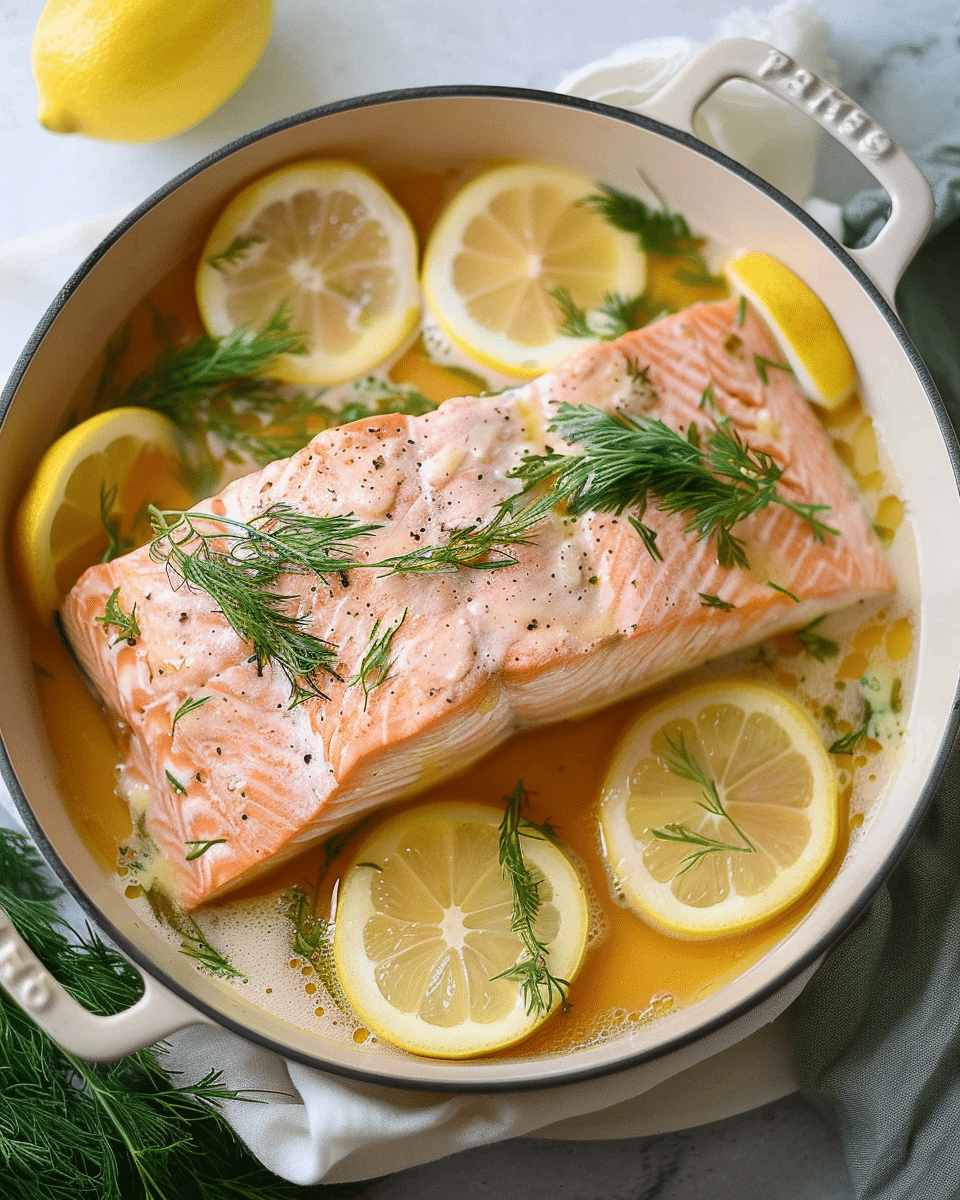
Poached Salmon is incredibly easy to prepare with minimal ingredients and no fancy equipment. The gentle poaching method keeps the salmon moist and delicate without the need for added fats. It’s a healthy option that’s naturally low-carb, gluten-free, and high in protein and omega-3s. Plus, it pairs wonderfully with a variety of sauces and side dishes.
Ingredients
(Tip: You’ll find the full list of ingredients and measurements in the recipe card below.)
salmon fillets (skin-on or skinless) water or fish stock dry white wine (optional) lemon slices fresh dill or parsley bay leaf black peppercorns salt onion slices or shallots (optional)
Directions
In a large skillet or shallow pan, combine water or stock with white wine, lemon slices, herbs, peppercorns, and a pinch of salt. Bring to a gentle simmer over medium heat.
Reduce heat to low so the liquid stays just below a boil.
Gently place the salmon fillets in the poaching liquid, skin side down if applicable. The liquid should barely cover the fish.
Cover the pan with a lid and poach the salmon for about 10–12 minutes, or until the flesh is opaque and flakes easily with a fork.
Remove the salmon carefully with a slotted spatula and let rest for a couple of minutes before serving.
Serve warm or chilled, with your choice of sauce or garnish.
Servings and timing
This recipe makes 4 servings. Prep time: 5 minutes Cook time: 12 minutes Total time: 17 minutes
Variations
Add garlic, ginger, or green onions for an Asian-inspired twist.
Use orange slices and thyme for a citrus-herb flavor profile.
Poach in coconut milk with lime and cilantro for a tropical version.
Serve with hollandaise, dill sauce, or a light vinaigrette.
Flake the poached salmon and use it in salads, wraps, or pasta dishes.
Storage/Reheating
Store leftover poached salmon in an airtight container in the refrigerator for up to 3 days. To serve cold, simply bring to room temperature or enjoy directly from the fridge. To reheat, do so gently in a covered skillet over low heat with a bit of water or broth to prevent drying out. Avoid microwaving to preserve the delicate texture.
FAQs
What type of salmon is best for poaching?
Fresh, high-quality fillets such as Atlantic or wild-caught sockeye or coho work best. Skin-on fillets help hold the fish together during poaching.
Do I need to remove the skin before poaching?
No, you can poach with the skin on. It helps keep the fish intact and can be removed easily after cooking if desired.
Can I use frozen salmon?
Yes, just make sure it’s fully thawed before poaching to ensure even cooking.
How do I know when the salmon is done?
The salmon is done when it turns opaque and flakes easily with a fork. A thermometer inserted into the thickest part should read 125°F for medium or 145°F for well done.
Is poached salmon healthy?
Yes, it’s a very healthy cooking method with no added fat, and salmon is rich in protein and omega-3 fatty acids.
Can I poach the salmon ahead of time?
Absolutely. Poached salmon can be made ahead and served cold or gently reheated.
What should I serve with poached salmon?
It pairs well with salads, steamed vegetables, rice, or potatoes. A creamy dill sauce or lemon vinaigrette also complements it nicely.
Can I use broth instead of water?
Yes, fish stock or vegetable broth adds more flavor to the poaching liquid.
What’s the best pan to use for poaching?
A shallow, wide skillet with a lid is ideal for evenly cooking the fish and keeping it submerged.
Can I reuse the poaching liquid?
For food safety reasons, it’s best not to reuse the liquid unless it’s strained and boiled again. You can reduce it and turn it into a sauce if desired.
Conclusion
Poached Salmon is a beautifully simple, healthy, and elegant dish that highlights the natural flavor of the fish. With a few aromatic ingredients and a gentle cooking method, you can create a tender and moist salmon fillet every time. Whether served warm or chilled, it’s a versatile recipe you’ll come back to again and again.
Poached Salmon is a light and elegant dish made by gently simmering salmon fillets in a flavorful broth. The result is tender, moist, and delicately flavored salmon that can be served warm or cold, making it perfect for any occasion.
Ingredients
4 salmon fillets (skin-on or skinless)
2 cups water or fish stock
1/2 cup dry white wine (optional)
1 lemon, sliced
2 sprigs fresh dill or parsley
1 bay leaf
6 black peppercorns
1/2 teaspoon salt
1/2 onion, sliced or 2 shallots, sliced (optional)
Instructions
In a large skillet or shallow pan, combine the water or fish stock, white wine (if using), lemon slices, dill or parsley, bay leaf, peppercorns, salt, and onion or shallots.
Bring the mixture to a gentle simmer over medium heat.
Reduce the heat to low, ensuring the liquid stays just below a boil.
Gently place the salmon fillets into the poaching liquid, skin side down if applicable. The liquid should just cover the fish.
Cover the pan with a lid and poach for 10–12 minutes, or until the salmon is opaque and flakes easily with a fork.
Remove the salmon carefully with a slotted spatula and let it rest for a couple of minutes before serving.
Serve warm or chilled with your choice of sauce or garnish.
Notes
Use fresh, high-quality salmon for the best flavor and texture.Don’t let the poaching liquid boil—keep it at a gentle simmer to avoid overcooking.Poached salmon can be served warm, cold, or used in other dishes like salads or wraps.Leftovers can be stored for up to 3 days in the refrigerator.