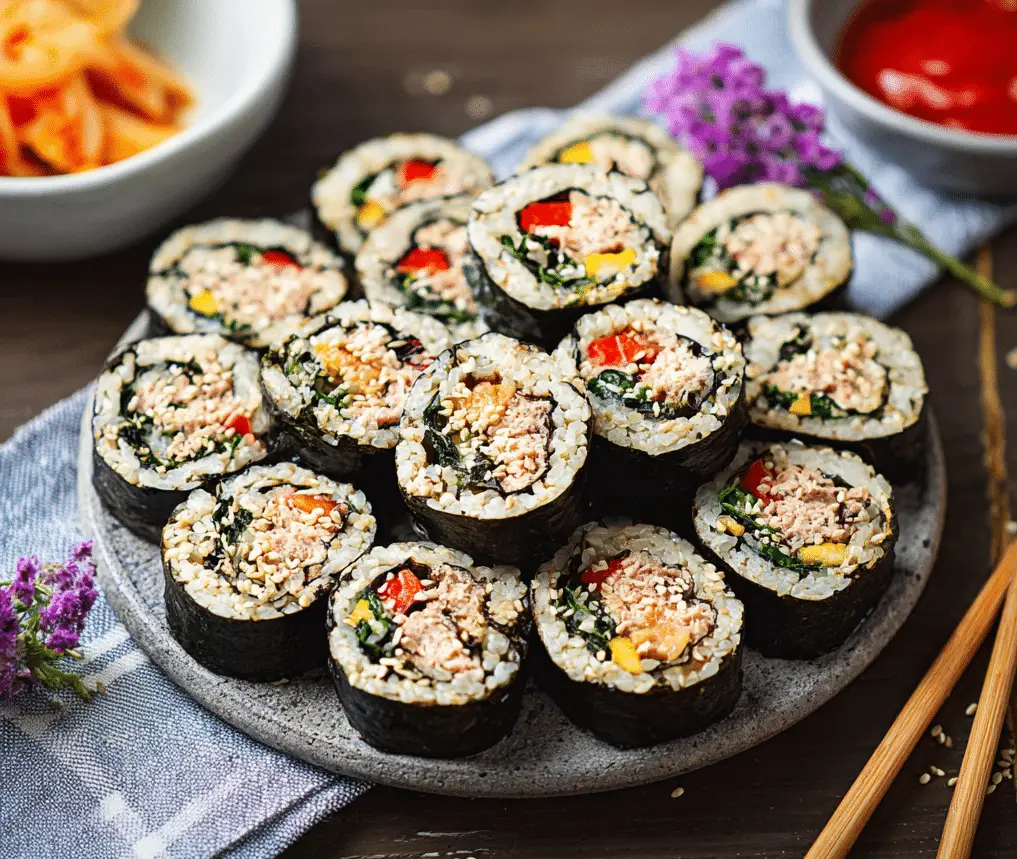
Tuna kimbap is easy to prepare and incredibly versatile. It’s milder than other kimbap varieties, making it a great choice for both adults and kids. The tuna filling is creamy and savory, while the fresh vegetables add crunch and color. Unlike sushi, kimbap doesn’t use raw fish or wasabi, and the rice is seasoned with sesame oil instead of vinegar.
Ingredients
(Tip: You’ll find the full list of ingredients and measurements in the recipe card below.)
Cooked short-grain white rice (warm)
Tuna (canned in water or oil, drained)
Mayonnaise
Salt and pepper
Sesame oil
Toasted sesame seeds
Carrot (julienned)
Cucumber (cut into thin strips)
Pickled yellow radish (danmuji, sliced into long strips)
Eggs (beaten and cooked into a thin omelet, sliced)
Roasted seaweed sheets (gim/nori)
Directions
Prepare the Rice
Season warm cooked rice with sesame oil, a pinch of salt, and sesame seeds. Let cool slightly.
Make the Tuna Filling
Mix drained tuna with mayonnaise, a pinch of salt, and black pepper until creamy.
Prepare Fillings
Julienne carrots and sauté lightly in oil with a pinch of salt.
Slice cucumber and pickled radish into long, thin strips.
Beat eggs and cook into a flat omelet. Let cool, then slice into strips.
Assemble the Kimbap
Lay a sheet of seaweed shiny-side down on a bamboo mat.
Spread a thin layer of rice over two-thirds of the sheet, leaving space at the top.
Place tuna filling and vegetable strips horizontally across the center.
Use the mat to tightly roll the kimbap from bottom to top, pressing gently but firmly.
Seal the edge with a dab of sesame oil or rice if needed.
Slice and Serve
Brush the roll lightly with sesame oil and sprinkle with sesame seeds.
Slice into ½-inch rounds with a sharp knife. Clean the blade between cuts for neat slices.
Servings and timing
This recipe makes about 4 rolls (20–24 pieces total). Prep time: 30 minutes Cook time: 10 minutes Total time: 40 minutes
Variations
Spicy Tuna Kimbap: Add gochujang (Korean chili paste) or sriracha to the tuna mix.
Avocado Addition: Include avocado slices for extra creaminess.
No Mayo Version: Mix tuna with mashed tofu and a touch of sesame oil for a lighter option.
Brown Rice Kimbap: Use seasoned brown rice for a fiber-rich version.
Mini Kimbap: Make bite-sized rolls with smaller nori sheets for snacks or lunchboxes.
Storage/Reheating
Storage: Best eaten fresh, but you can wrap tightly in plastic and refrigerate for up to 24 hours.
Reheating: Not recommended, but if needed, microwave briefly wrapped in a damp paper towel to prevent drying out.
Freezing: Not recommended due to texture changes in the rice and seaweed.
FAQs
Is tuna kimbap the same as sushi?
No. Kimbap uses sesame oil–seasoned rice and cooked or pickled fillings, while sushi typically uses vinegared rice and raw fish.
Can I use jasmine or long-grain rice?
Short-grain rice is best because it’s sticky and holds together when rolled.
How do I keep the roll from falling apart?
Use enough rice to help bind the fillings and roll tightly with even pressure.
What’s the best tuna for kimbap?
Any canned tuna works, but tuna in oil adds extra richness and flavor.
Can I make it ahead of time?
Yes, but it’s best within a few hours. Keep it tightly wrapped to maintain freshness.
What’s danmuji and where can I find it?
Danmuji is Korean pickled yellow radish, available at Asian grocery stores, refrigerated and pre-sliced.
Can I leave out the eggs?
Yes, the recipe is flexible. Simply omit or substitute with another filling.
What dipping sauce goes with kimbap?
Traditionally, kimbap is eaten without sauce, but soy sauce or a light sesame dressing can be used if desired.
Is tuna kimbap healthy?
Yes—it’s a balanced mix of protein, carbs, and vegetables, especially if you go light on the mayo.
Can kids eat this?
Absolutely! It’s mild, customizable, and fun for lunchboxes.
Conclusion
Tasty tuna kimbap is a fun, flavorful, and satisfying Korean dish that’s as easy to make as it is enjoyable to eat. With creamy tuna, crisp veggies, and savory rice rolled in seaweed, it’s a perfect balance of texture and flavor. Whether you’re making it for a picnic, lunch, or dinner, this dish brings a delicious taste of Korea to your kitchen.
Tasty tuna kimbap is a Korean-style seaweed rice roll filled with creamy tuna salad, crisp vegetables, and seasoned rice. It’s portable, flavorful, and perfect for lunchboxes, picnics, or a light meal.
Ingredients
3 cups cooked short-grain white rice (warm)
1 tablespoon sesame oil
1/2 teaspoon salt
1 tablespoon toasted sesame seeds
1 can (5 oz) tuna, drained
2 tablespoons mayonnaise
Salt and black pepper to taste
1 carrot, julienned and lightly sautéed
1/2 cucumber, cut into thin strips
4 strips pickled yellow radish (danmuji)
2 eggs, beaten and cooked into a thin omelet, sliced
4 sheets roasted seaweed (gim/nori)
Optional garnish: extra sesame oil and sesame seeds for brushing and topping
Instructions
Season the rice: In a large bowl, mix warm rice with sesame oil, salt, and toasted sesame seeds. Let cool slightly.
Prepare the tuna filling: Mix drained tuna with mayonnaise, salt, and pepper until creamy.
Cook the vegetables and egg: Sauté julienned carrots with a pinch of salt. Cook eggs into a thin omelet, let cool, and slice into strips.
Assemble the rolls: Place a sheet of seaweed shiny-side down on a bamboo mat. Spread rice evenly over two-thirds of the sheet.
Arrange a line of tuna, carrots, cucumber, radish, and egg strips across the center of the rice.
Use the bamboo mat to tightly roll the kimbap, sealing the edge with a bit of sesame oil or rice.
Finish and serve: Brush rolls with a bit of sesame oil and sprinkle with sesame seeds. Slice into 1/2-inch pieces using a sharp knife. Wipe the knife between cuts for clean slices.
Notes
Short-grain rice is essential for proper rolling and texture.Use tuna in oil for extra richness, or in water for a lighter option.Danmuji (pickled radish) adds sweet-tangy crunch and is available at Asian grocery stores.Kimbap is best eaten fresh but can be stored for up to 24 hours wrapped tightly in plastic.Use a damp paper towel under the cutting board to prevent slipping while slicing.