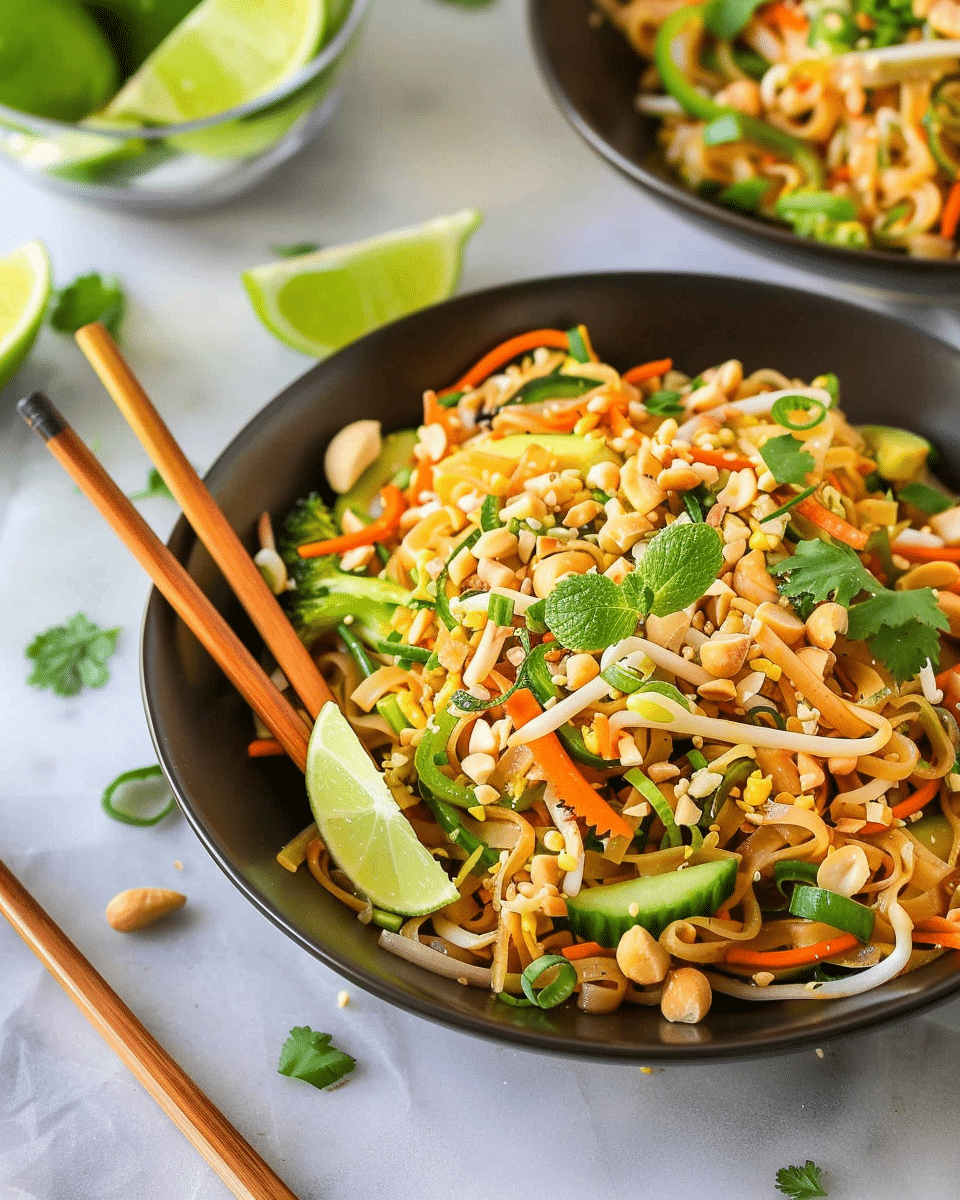
Vegetarian Pad Thai is quick to prepare, incredibly versatile, and full of bold flavors. The tamarind-based sauce gives it that authentic tangy depth, while crunchy peanuts, fresh herbs, and crisp veggies keep every bite interesting. It’s lighter than takeout, easy to customize, and makes an ideal lunch or dinner that’s both nourishing and comforting.
Ingredients
(Tip: You’ll find the full list of ingredients and measurements in the recipe card below.)
rice noodles (flat, about ¼ inch wide) eggs (omit or use tofu for vegan version) garlic, minced carrots, julienned bean sprouts green onions, chopped red bell pepper, thinly sliced extra-firm tofu (optional, for added protein) crushed peanuts lime wedges fresh cilantro (optional)
For the sauce: tamarind paste soy sauce brown sugar or coconut sugar rice vinegar chili flakes or sriracha (optional, for heat)
Directions
Cook the rice noodles according to package instructions until just tender. Drain and rinse under cold water to stop cooking. Set aside.
In a small bowl, whisk together tamarind paste, soy sauce, brown sugar, rice vinegar, and chili flakes or sriracha if using.
If using tofu, press and cube it, then sauté in a bit of oil until golden. Set aside.
Heat oil in a large skillet or wok over medium-high heat. Add garlic and sauté until fragrant, about 30 seconds.
Add carrots and bell pepper. Stir-fry for 2–3 minutes until slightly softened.
Push vegetables to one side and crack the eggs into the pan. Scramble until just set, then combine with the veggies.
Add cooked noodles, tofu (if using), and the sauce. Toss everything together until well-coated and heated through.
Add bean sprouts and green onions. Cook for another minute, stirring to combine.
Serve hot, topped with crushed peanuts, cilantro, and lime wedges.
Servings and timing
This recipe serves 3–4 people. Preparation time: 15 minutes Cooking time: 10 minutes Total time: 25 minutes
Variations
Vegan version: Omit eggs and use tofu as the main protein. Ensure soy sauce and sugar are vegan.
Spicy version: Add Thai chili flakes, sriracha, or chopped fresh chili to the sauce.
Nut-free: Skip peanuts or use toasted sunflower seeds or sesame seeds instead.
More veggies: Add zucchini, snow peas, broccoli, or shredded cabbage for more texture and nutrition.
Low-carb option: Substitute rice noodles with spiralized zucchini or shirataki noodles.
Storage/Reheating
Store leftovers in an airtight container in the refrigerator for up to 3 days. To reheat, warm in a skillet over medium heat with a splash of water or oil, stirring until hot. Microwaving works too, but stovetop reheating helps preserve texture better. Freezing is not recommended, as rice noodles may turn mushy.
FAQs
What is Pad Thai sauce made of?
The sauce typically includes tamarind paste, soy sauce, sugar, vinegar, and optional chili for spice. It’s sweet, salty, and tangy.
Can I make Pad Thai without tamarind?
Yes, substitute with lime juice and a little extra vinegar, though the flavor will be slightly different.
Is Pad Thai normally vegetarian?
Traditional Pad Thai contains fish sauce and sometimes shrimp, but it can easily be made vegetarian or vegan.
What kind of noodles are used in Pad Thai?
Flat rice noodles, about ¼ inch wide, are traditional and best for this dish.
Can I make this ahead of time?
You can prep the sauce, chop the veggies, and cook the tofu in advance. Assemble everything just before serving for the best texture.
How do I keep the noodles from sticking?
Rinse them in cold water after boiling and toss with a bit of oil before adding to the pan.
What tofu is best for Pad Thai?
Extra-firm tofu works best, especially when sautéed or pan-fried to a golden crisp.
Can I use pre-packaged Pad Thai sauce?
Yes, but making your own gives better control over ingredients and flavor.
How do I adjust the sweetness?
Taste the sauce before adding and adjust the sugar to your preference—it should be balanced, not overly sweet.
Can I double the recipe?
Yes, but cook in batches to avoid overcrowding the pan, which can lead to soggy noodles.
Conclusion
Vegetarian Pad Thai is a flavorful, flexible dish that brings all the bold, comforting flavors of traditional Thai cuisine without the meat. It’s easy to whip up in under 30 minutes, packed with vegetables, and can be tailored to your dietary preferences. Whether you’re vegetarian, vegan, or just craving something colorful and delicious, this homemade Pad Thai is sure to satisfy.
Vegetarian Pad Thai is a vibrant noodle stir-fry made with rice noodles, vegetables, scrambled eggs, and a tangy tamarind-based sauce. This meat-free version of the Thai classic is packed with bold flavor, texture, and color, perfect for a quick, satisfying meal.
Ingredients
8 oz flat rice noodles (about 1/4 inch wide)
2 eggs (omit for vegan version)
2 cloves garlic, minced
1 cup carrots, julienned
1 cup bean sprouts
1/2 cup green onions, chopped
1 red bell pepper, thinly sliced
1 cup extra-firm tofu, pressed and cubed (optional)
1/4 cup crushed peanuts
Lime wedges, for serving
Fresh cilantro (optional, for garnish)
2 tablespoons oil (for stir-frying)
For the sauce:
2 tablespoons tamarind paste
3 tablespoons soy sauce
1 tablespoon brown sugar or coconut sugar
1 tablespoon rice vinegar
1/2 teaspoon chili flakes or 1 teaspoon sriracha (optional)
Instructions
Cook rice noodles according to package instructions until just tender. Drain and rinse under cold water. Set aside.
In a small bowl, whisk together tamarind paste, soy sauce, brown sugar, rice vinegar, and chili flakes or sriracha.
If using tofu, sauté the cubes in a bit of oil until golden. Set aside.
Heat oil in a large skillet or wok over medium-high heat. Add minced garlic and sauté for 30 seconds until fragrant.
Add carrots and red bell pepper. Stir-fry for 2–3 minutes until just tender.
Push veggies to one side. Crack eggs into the pan and scramble until just set. Mix with the vegetables.
Add cooked noodles, tofu (if using), and sauce. Toss everything together until evenly coated and heated through.
Add bean sprouts and green onions. Stir-fry for 1 more minute.
Serve hot, topped with crushed peanuts, lime wedges, and cilantro if using.
Notes
Use extra-firm tofu for best texture, and sauté until golden.Omit eggs and ensure all ingredients are vegan-friendly for a fully vegan version.For nut-free, use sunflower seeds or omit toppings entirely.Prep all ingredients before cooking—Pad Thai comes together quickly in the pan.